
Random Updates
1) You need your own IPs and 2) genres need reality baths

There seems to be a clear awareness among comics creators right now. The old system is crumbling, and you need to build projects where you own the rights — ideally cutting out the middlemen.
Lorenzo Palloni says it, Davide Costa reflects on it, Coleen Doran says it on her Substack (I can’t remember the exact quote, but the gist was: “If you never create anything that generates royalties, you’ll never have royalties”). I heard the same thing at last year’s MIFA, where the head of a production company — Canadian? Australian? — said, roughly: “If we keep up with this business model, we’ll just be a service shop. We need proprietary IPs.”
Voilà, that’s it. Easy? No. Is this an incredibly crowded moment? Yes. Is it a moment to try to make something personal — because at least you’ll have tried with something that, I won’t say you hate, but isn’t exactly your first creative thought when you roll out of bed in the morning? Yes. Making the financial side of it work while also getting enough sleep is an absolute nightmare? Yes.
WHAT I’M WATCHING
The only show I’m watching right now is THE PITT on HBO Max. Aside from my personal annoyance at how many nepo-babies are in the cast, this show delivers on one of the principles I picked up studying the work — and interviews — of Jed Mercurio (random interview where he talks about it): “To reinvent a genre, you have to give it a reality bath.” Reality and not just “realism”. Go back to actual procedures, stop working off genre stereotypes that calcify over time. In this case: no soundtrack, long silences during scenes, camera always at human eye level. The “docu” intent is obvious and it works. Younger viewers might think it’s revolutionary — those of us old enough remember Dogme 95 and the democratization of cinema through digital, the restricted-means approach that called for “realism.” What reality even means today, who can say — but our real job as storytellers is to ask questions and let readers/viewers/audiences find their own answers.
RANDOM PLOT STRUCTURAL ANALYSIS THOUGHT
The plot of Demon Slayer is: “Group of humans who use a breathing technique to fight demons that feed on human blood — basically vampires — whose leader wants to find a way to survive sunlight.” That’s essentially the plot of the first two seasons of JoJo’s Bizarre Adventure. I assume Araki is too much of a gentleman to point that out.
WHAT I’VE BEEN READING
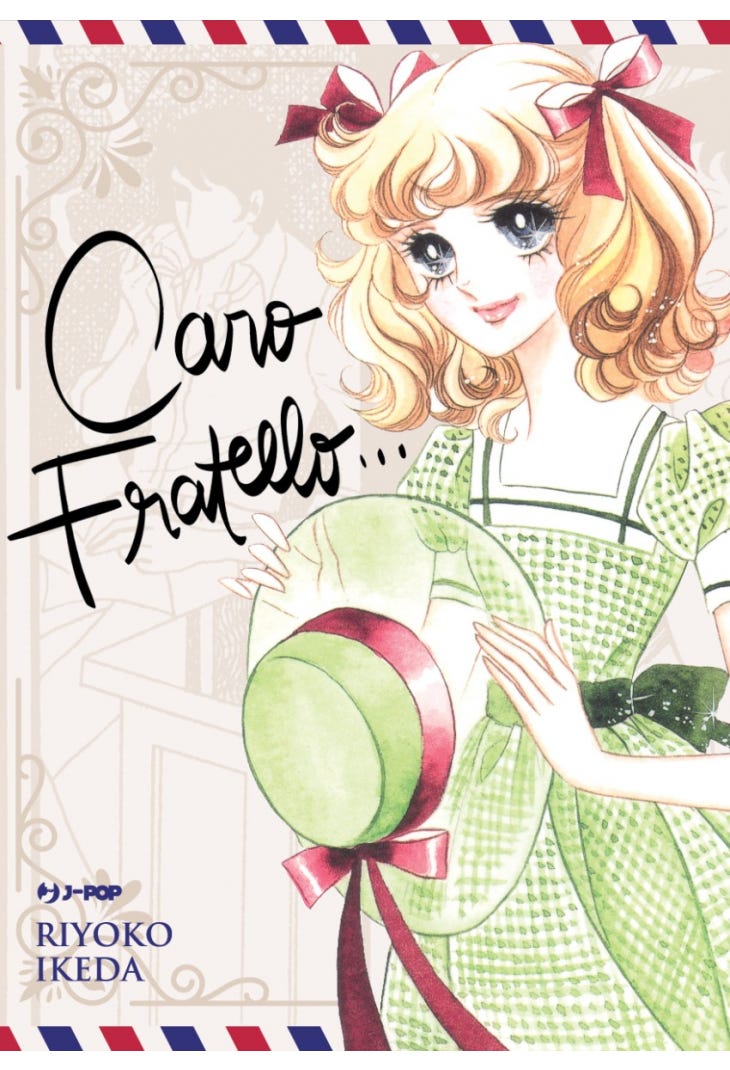
Dear Brother (Oniisama e…), 1974, by Riyoko Ikeda (can’t find and English version of this, sorry. There is a 2009 edition in French by Kazé that is sold in the used market for over 300€… :-( )
An absolute masterpiece of shojo manga. Ikeda in full command of her narrative and visual language — a timeless melodrama packed with larger-than-life characters. The pages land like one showstopper after another. She uses devices her colleagues in the Year 24 Group also deployed, but here they’re so completely organic to the storytelling that it’s stunning: abstract elements, faces without pupils, white silhouettes, page layouts and komawari that “explode” just like the characters’ emotions do. What makes the Italian volume even more valuable: the two earlier stories included at the end — particularly “Summer in Canterbury,” where Tezuka’s influence is still deep and unmistakable. From character design to the still-traditional page composition, to the emanata (visual morphemes, or manpu in Japanese) that are clearly borrowed wholesale from the visual vocabulary of the “God of Manga.” Seeing that earlier work — and then the leap to the perfection of Dear Brother — makes the journey even more moving.
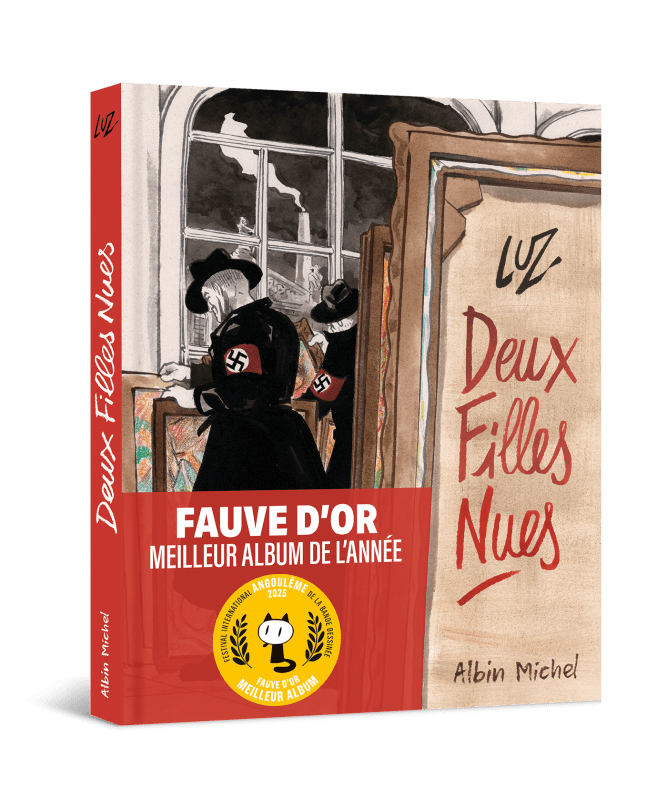
Deux filles nues (Two Naked Girls), 2025, by Luz
This graphic novel tells a piece of European history from a very specific point of view: the POV of the painting Two Naked Girls by Otto Müller (1919). From the first moments when the artist’s brush strokes “create” the painting’s gaze, until the canvas is complete, we follow Müller’s career — starting with his decision to leave Berlin, where he was struggling financially. A subjectivity that unfolds across decades from the perspective of a painting. What a damn idea. I’d love to know whether a book like this could find an audience outside France, or even outside Europe — but this narrative device alone should make it immediately be considered a classic immediately. Two Naked Girls won the Fauve d’Or at the Angoulême Festival in 2025, and calling it deserved is an understatement (flip through it here).
.
That's it for today — a massive workload is almost behind me, and now I've got to hit the ground running on whatever comes next, which is already here. Talk soon!
Mi pare ci sia una chiara consapevolezza tra gli autori di fumetto in questo periodo storico.
Il vecchio sistema sta crollando, e bisogna creare progetti di cui si detengono i diritti, possibilmente senza intermediari.
Lo dice il buon Lorenzo Palloni, è una riflessione di Davide Costa, lo dice Coleen Doran nel suo Substack (non ricordo la citazione esatta, ma il concetto era “Se non crei mai nulla che produce royalties, non avrai mai royalties”). Lo stesso concetto lo avevo sentito allo scorso MIFA, dove la responsabile di una casa di produzione (canadese? Australiana?) aveva detto (anche qui vado a memoria): “Se continuiamo con questo business model, saremo solo un service. Ci servono IP proprietarie.”
Voilà, that’s it. Facile? No. Momento affollatissimo? Sì. Momento di provare a fare qualcosa di personale perché almeno ci avrai provato con una cosa che non dico odi, ma che non è esattamente il tuo primo pensiero creativo alla mattina quando ti alzi? Sì. Far tornare i conti e il numero delle ore di sonno è complicatissimo? Sì.
COSA STO GUARDANDO
L’unica serie tv che sto guardando è THE PITT su HBO Max. A parte il mio personale fastidio per il numero di attori e attrici nepo-kids che ci sono nello show, questa serie risponde a uno dei principi che ho imparato studiando il lavoro (e leggendo le interviste) di Jed Mercurio (intervista a caso in cui esprime il concetto): “Per rinnovare un genere, bisogna fargli fare un bagno di realtà.” Non realismo: realtà. Tornare alle procedure vere, non lavorare sugli stereotipi del genere che dopo un po’ diventano calcificati. Niente colonna sonora, lunghi silenzi durante le scene, camera sempre ad altezza essere umano. L’intento “docu” è chiaro e funziona. Ai giovani potrà sembrare una rivoluzione, noi che siamo abbastanza vecchi ricordiamo il Dogma 95 e la democratizzazione del cinema proposta col digitale e la restrizione di mezzi che invocava “realismo”. Cosa sia oggi la realtà, chi può dirlo, ma il vero lavoro di noi narratori è farci domande, e lasciare che lettori/lettrici/pubblico trovino le loro risposte.
PENSIERO A CASO DI ANALISI STRUTTURALE DI UN PLOT
La trama di Demon Slayer è “Gruppo di umani che con una tecnica di respirazione combattono contro demoni che si nutrono di sangue umano -> vampiri e il cui capo vuole trovare il modo di sopravvivere alla luce del sole.” Praticamente la trama delle prime due stagioni de Le bizzarre avventure di Jojo. Immagino che Araki sia troppo gentleman per far notare la cosa.
COSA HO LETTO
Caro fratello/おにいさまへ… (Oniisama e...,), 1974, di Riyoko Ikeda
Capolavoro ASSOLUTO dello shojo manga. Una Ikeda in piena padronanza dei propri stilemi narrativi e grafici, un melodramma fuori dal tempo popolato da personaggi larger than life. Le tavole sono un colpo da maestra dopo l’altro, con stilemi usati certo anche dalle colleghe coeve del Gruppo dell’anno 24, ma qui così perfettamente organici alla narrazione da lasciare impressionati: elementi astratti, visi senza pupille, silhouette bianche, layout di pagina e komawari completamente “esplosi” come esplodono i sentimenti delle protagoniste.
Ancora più prezioso il fatto che in questa edizione di J-Pop ci siano due storie finali precedenti, in particolare “Estate a Canterbury” dove l’influenza Tezukiana è ancora profonda e impressionante: dal design dei personaggi, alla composizione della tavola ancora tradizionale, con closure spesse e addirittura gli emanata (o visual morphemes/morfemi visivi, o “manpu” in giapponese) che sono evidentemente presi di forza dal vocabolario visivo/narrativo del “dio dei manga”: e l’evoluzione e la perfezione di Caro fratello non fanno che rendere ancora più emozionante vedere il percorso compiuto dalla sensei.
Deux filles nues/Due ragazze nude, 2025, Luz.
Questo graphic novel racconta un pezzo della storia d’Europa in soggettiva : e la soggettiva è quella del quadro “Due ragazze nude”, di Otto Müller, che lo dipinse nel 1919.
Dai primi momenti in cui i tratti del pittore “creano” lo sguardo del dipinto, fino a che la tela non è completa, accompagniamo Müller nella sua carriera, a partire dalla decisione di trasferirsi da Berlino dove viveva in difficoltà economiche. Una soggettiva che si dipana nel corso di decenni dal punto di vista di un quadro. Che cazzo di idea. Mi piacerebbe sapere se un fumetto del genere potrebbe interessare fuori dalla Francia, o anche solo fuori dall’Europa, ma solo questo artificio narrativo dovrebbe inserirlo immediatamente nei classici.
Due ragazze nude ha vinto il Fauve d’Or al Festival d’Angouleme nel 2025 e dire che è meritato è un understatement.
Per oggi è tutto, un enorme carico di lavoro è quasi finito e bisogna correre per elaborare il dopo che è già adesso. A presto!